Future of Smart Homes: 7 Powerful Connected Living Trends Smart homes are transforming the way people live, work, relax, and interact with their surroundings. From intelligent lighting and
Future of Smart Homes: 7 Powerful Connected Living Trends
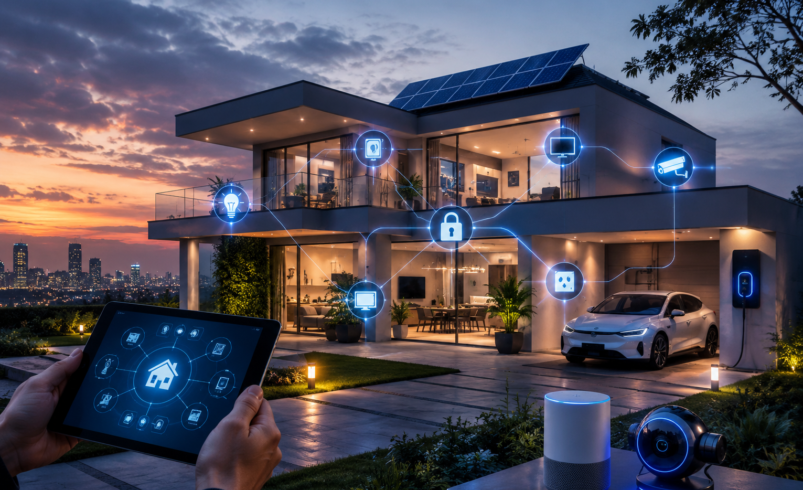
Smart homes are transforming the way people live, work, relax, and interact with their surroundings. From intelligent lighting and voice-controlled assistants to connected appliances and automated security systems, technology is making homes more convenient, efficient, and responsive.
As connected devices become more advanced, the future of home living will focus not only on automation but also on creating personalized, energy-efficient, and secure environments.
Smarter Home Automation
Future smart homes will be able to understand daily routines and automatically adjust the environment according to individual preferences. Lights, thermostats, curtains, entertainment systems, and appliances can work together with minimal manual control.
Instead of simply responding to commands, smart systems will increasingly anticipate what homeowners need.
The Rise of AI-Powered Homes
Artificial intelligence will play a major role in connected living. AI-powered systems can learn household patterns, recognize preferences, and make intelligent decisions based on changing conditions.
For example, a smart home could automatically adjust temperature settings, lighting, or energy usage based on occupancy and daily routines.
Connected Appliances
Kitchen and household appliances are becoming increasingly connected. Smart refrigerators, washing machines, ovens, and robotic cleaning devices can communicate with homeowners and other devices.
These appliances can provide reminders, monitor usage, and automate routine tasks, helping people save time and manage their homes more efficiently.
Energy Efficiency and Sustainability
One of the biggest benefits of smart home technology is improved energy management. Connected thermostats, smart lighting, energy monitors, and automated appliances can help reduce unnecessary consumption.
Future systems may coordinate energy usage based on household demand, renewable energy availability, and electricity pricing, making homes both smarter and more sustainable.
Advanced Home Security
Smart security will continue to evolve through connected cameras, smart locks, motion sensors, video doorbells, and intelligent monitoring systems.
Future security systems may use AI to identify unusual activity and provide homeowners with real-time alerts, creating a more proactive approach to home protection.
Personalized Living Experiences
Connected homes will become increasingly personalized. Entertainment, lighting, temperature, and other settings can automatically adapt to different members of a household.
A home may recognize who is present and create a preferred environment without requiring repeated instructions.
Health and Wellness at Home
Smart technology could also support healthier living environments. Connected sensors can monitor factors such as air quality, temperature, humidity, and noise.
Smart lighting and environmental controls may help create comfortable spaces for working, sleeping, exercising, and relaxing.
Seamless Device Connectivity
The future of smart homes depends heavily on devices communicating with one another. Instead of having separate systems that operate independently, connected platforms will increasingly work together.
This interoperability can create a smoother experience where one action automatically triggers several connected functions.
Privacy and Cybersecurity
As homes become more connected, privacy and security will become increasingly important. Smart devices collect and exchange significant amounts of information, making strong security practices essential.
Manufacturers and homeowners will need to prioritize secure connections, software updates, privacy controls, and responsible data management.
The Future of Connected Communities
Smart technology may eventually extend beyond individual homes. Connected buildings, neighborhoods, and cities could share systems for energy management, transportation, security, and environmental monitoring.
This could create a broader ecosystem where homes interact with the infrastructure around them.
What Smart Living Could Look Like
Imagine arriving home and having the lights automatically turn on, the temperature adjusted to your preference, your favorite music begin playing, and security systems switch to home mode. These experiences are becoming increasingly possible as connected technologies improve.
The goal is not simply to fill homes with gadgets, but to create living spaces that quietly make everyday life easier.
“The smartest home is not the one with the most technology, but the one that uses technology to make life simpler.”
The future of smart homes is moving toward greater automation, personalization, efficiency, and connectivity. Artificial intelligence, connected appliances, smart security, and energy-management technologies will continue to reshape everyday living.
As these innovations develop, successful smart homes will combine advanced technology with simplicity, privacy, and human needs—creating connected spaces that feel less complicated and more natural to live in.