

How 5G and 6G Will Transform Connectivity
- August 13, 2026
- 0
How 5G and 6G Will Transform Connectivity Connectivity is evolving faster than ever. The arrival of 5G has already changed how people, businesses, and devices communicate by delivering


How 5G and 6G Will Transform Connectivity Connectivity is evolving faster than ever. The arrival of 5G has already changed how people, businesses, and devices communicate by delivering
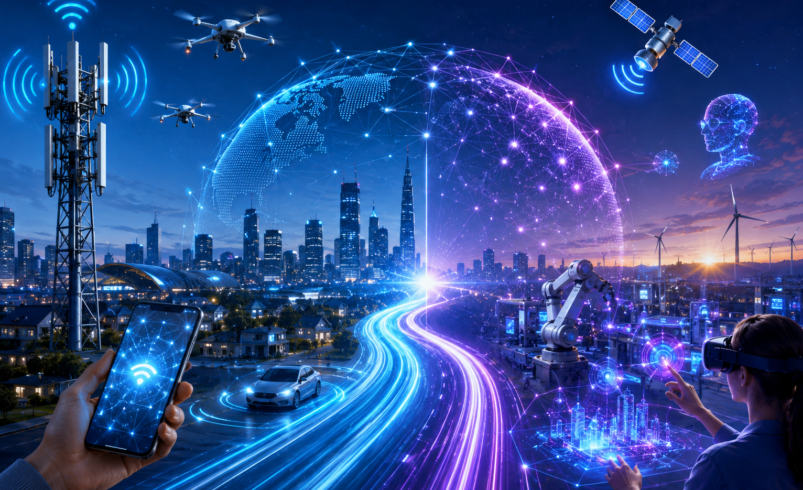
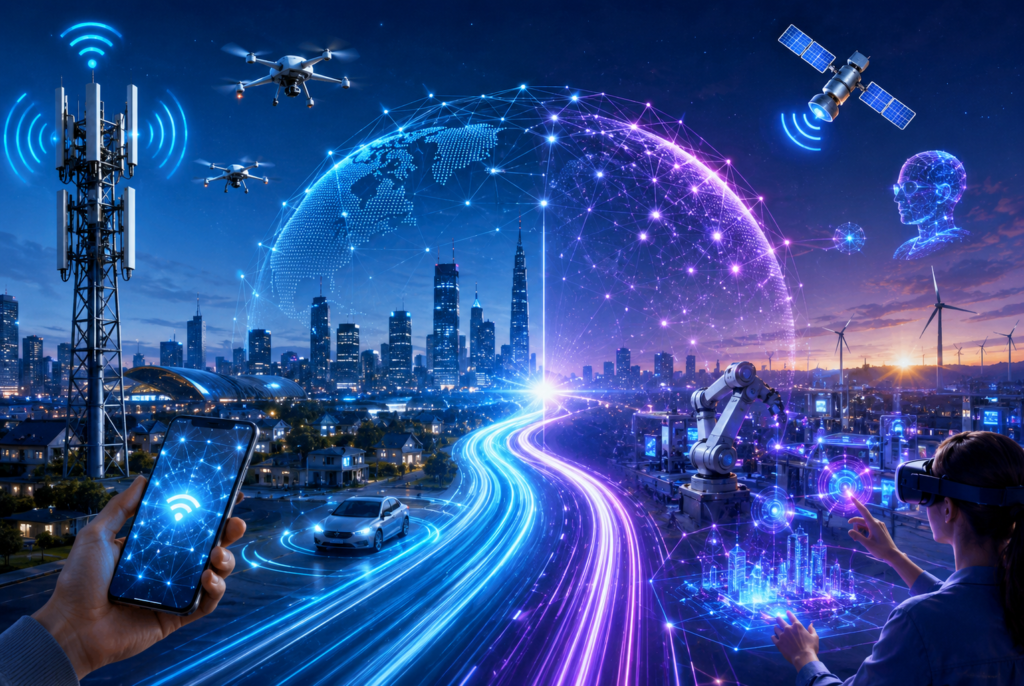
Connectivity is evolving faster than ever. The arrival of 5G has already changed how people, businesses, and devices communicate by delivering higher speeds, lower latency, and improved network capacity. As technology continues to advance, 6G is expected to take connectivity even further by enabling intelligent, immersive, and highly responsive digital experiences.
“The future of connectivity is not just about faster networks—it is about creating smarter connections between people, devices, and the world around us.”
5G, or the fifth generation of mobile network technology, is designed to provide significantly faster data speeds and lower latency than previous generations. It supports a massive number of connected devices while improving the reliability of wireless communication.
From smartphones and smart homes to industrial systems and connected vehicles, 5G is becoming an important foundation for the modern digital ecosystem.
One of the biggest advantages of 5G is its ability to deliver faster data transmission with extremely low latency. This allows applications to respond almost instantly, making technologies such as cloud gaming, remote control systems, video conferencing, and augmented reality more practical.
The Internet of Things (IoT) depends on reliable communication between connected devices. 5G can support large numbers of sensors, machines, appliances, and other smart devices simultaneously.
This can help create:
5G can transform healthcare by supporting faster communication between medical professionals, patients, and connected medical devices. Remote consultations, real-time monitoring, connected equipment, and advanced telemedicine applications can benefit from reliable high-speed connectivity.
Connected and autonomous vehicles require rapid communication with other vehicles, traffic systems, and surrounding infrastructure. 5G can help reduce communication delays and support safer, more coordinated transportation systems.
6G represents the next generation of wireless connectivity. Although its development is still progressing, the technology is expected to provide significantly greater performance than 5G, including higher data rates, extremely low latency, advanced sensing capabilities, and stronger integration with artificial intelligence.
6G could make digital communication feel more natural and immersive. Advanced technologies may support real-time holographic communication, extended reality, intelligent virtual environments, and highly responsive cloud-based applications.
Artificial intelligence is expected to play a central role in 6G networks. AI could help networks automatically identify traffic patterns, optimize resources, detect problems, and adjust performance according to changing requirements.
This combination of AI and 6G could create networks that are more autonomous, adaptive, and efficient.
Future smart cities could use 6G networks to connect millions of sensors and intelligent systems. Traffic management, public safety, energy distribution, environmental monitoring, and public services could become more automated and responsive.
6G could significantly improve virtual reality, augmented reality, and mixed reality experiences. Users may eventually interact with highly realistic digital environments with minimal delay, creating new possibilities for education, entertainment, training, business meetings, and remote collaboration.
5G focuses on improving mobile speed, capacity, latency, and device connectivity. 6G is expected to expand these capabilities by combining communication with AI, sensing, advanced computing, and immersive technologies.
| Feature | 5G | 6G |
|---|---|---|
| Generation | Fifth | Sixth |
| Main Focus | High-speed connectivity | Intelligent connectivity |
| Latency | Very low | Expected to be even lower |
| Applications | IoT, smart cities, connected vehicles | AI-native systems, immersive reality, advanced sensing |
| Intelligence | AI-assisted | Expected to be deeply AI-integrated |
Businesses can benefit from advanced connectivity through automation, remote collaboration, real-time analytics, smart manufacturing, and connected services. Faster and more reliable networks can also help organizations develop new digital products and improve customer experiences.
The transition from 5G to 6G will not simply be about increasing internet speed. It will be about creating a connected environment where people, machines, vehicles, sensors, and intelligent systems can communicate seamlessly.
As these technologies mature, connectivity could become an invisible foundation supporting almost every part of daily life and business.
5G is already changing the way the world connects, while 6G promises to take that transformation much further. From smart cities and autonomous vehicles to AI-powered networks and immersive digital experiences, next-generation connectivity could create opportunities that are difficult to imagine today.
The future of communication will be faster, smarter, more responsive, and increasingly integrated into the world around us.