

The Future of 3D Printing and Manufacturing
- August 14, 2026
- 0
Future of 3D Printing: 7 Amazing Manufacturing Trends The Rise of 3D Printing 3D printing is transforming traditional manufacturing by allowing objects to be created layer by layer


Future of 3D Printing: 7 Amazing Manufacturing Trends The Rise of 3D Printing 3D printing is transforming traditional manufacturing by allowing objects to be created layer by layer
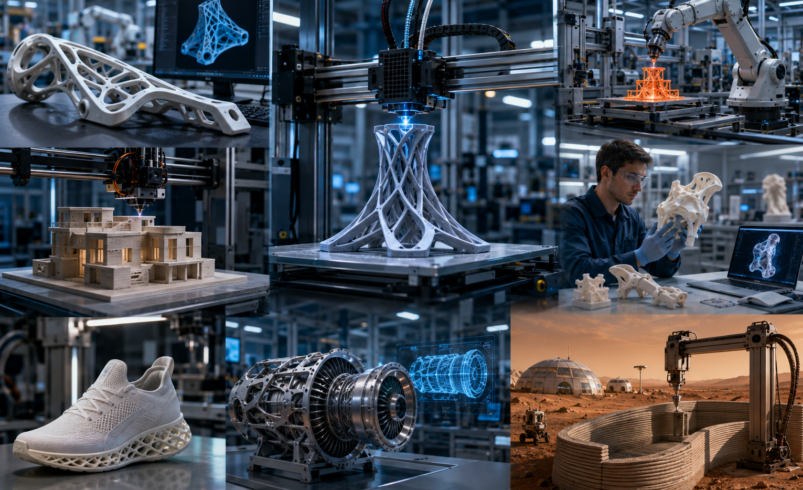
3D printing is transforming traditional manufacturing by allowing objects to be created layer by layer from digital designs. What once required expensive machinery and complex production processes can increasingly be achieved with flexible and highly automated printing technologies.
One of the biggest advantages of 3D printing is its flexibility. Manufacturers can quickly modify digital designs and produce customized parts without completely rebuilding their production systems. This can reduce development time and make manufacturing more adaptable.
3D printing makes mass customization more practical. Products can be designed according to individual requirements, from customized medical devices and footwear to specialized automotive and industrial components.
Healthcare is becoming an important area for 3D printing. The technology can be used to create customized prosthetics, dental products, anatomical models, and other medical components. Future developments may expand its role in regenerative medicine and bioprinting.
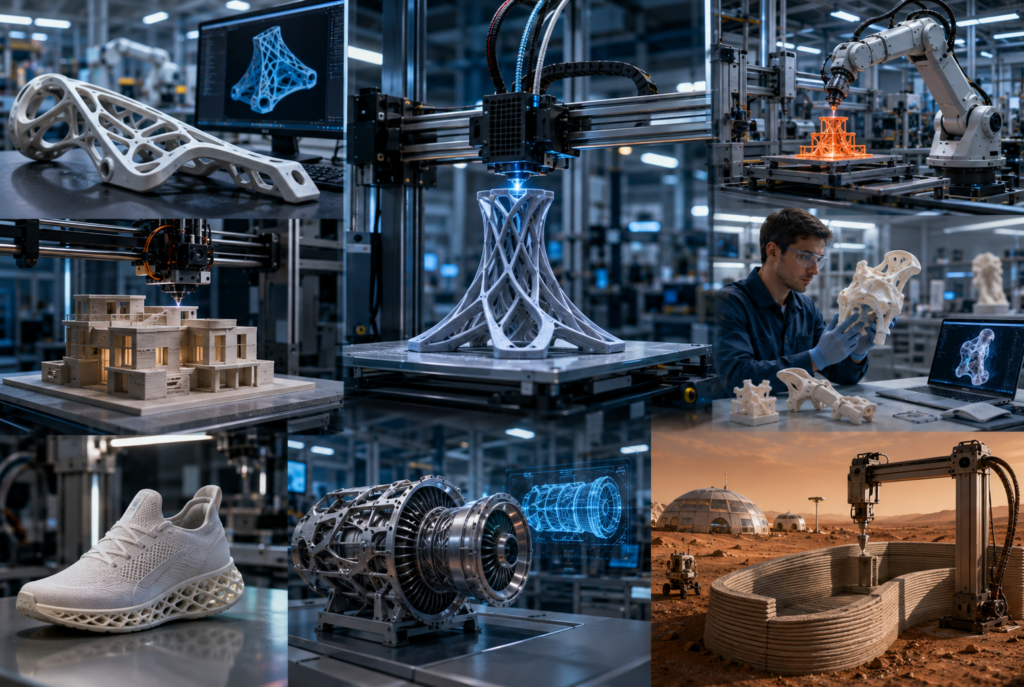
Large-scale 3D printers are being explored for construction applications. These systems can produce structural components and potentially entire buildings using automated processes. This could help reduce material waste and speed up certain construction projects.
Artificial intelligence can make 3D printing more intelligent and efficient. AI systems can analyze designs, identify potential printing problems, optimize material usage, and monitor production in real time to improve quality.
3D printing can help reduce waste by adding material only where it is needed. Combined with recyclable or bio-based materials, advanced printing methods could contribute to more sustainable production practices.
The future of 3D printing will depend heavily on advances in materials. Researchers and manufacturers are developing stronger, lighter, more flexible, and heat-resistant materials that can expand the range of products created through additive manufacturing.
3D printing could make localized production more practical. Instead of transporting every product over long distances, companies may eventually manufacture certain parts closer to where they are needed, helping reduce transportation time and inventory requirements.
3D printing could also support future space missions. Astronauts and space facilities may be able to manufacture tools, replacement parts, and other equipment on demand instead of carrying every possible component from Earth.
Despite its potential, 3D printing still faces challenges involving production speed, material costs, quality control, equipment limitations, and industry standards. Manufacturers will need to overcome these issues before the technology can be used more widely across every sector.
The combination of 3D printing, robotics, artificial intelligence, and advanced materials could create highly automated manufacturing environments. Factories may become more flexible, producing customized products quickly while reducing waste and improving efficiency.
“The future of manufacturing is moving from making products in large quantities to making smarter products exactly when and where they are needed.”
3D printing is more than a new production method—it represents a shift in how products are designed, manufactured, and delivered. As the technology continues to evolve, it could make manufacturing faster, more personalized, sustainable, and accessible across industries.