AI in Education Artificial intelligence is changing how students learn, teachers work, and educational institutions operate. From intelligent tutoring systems to AI-powered learning platforms, technology is creating new
AI in Education
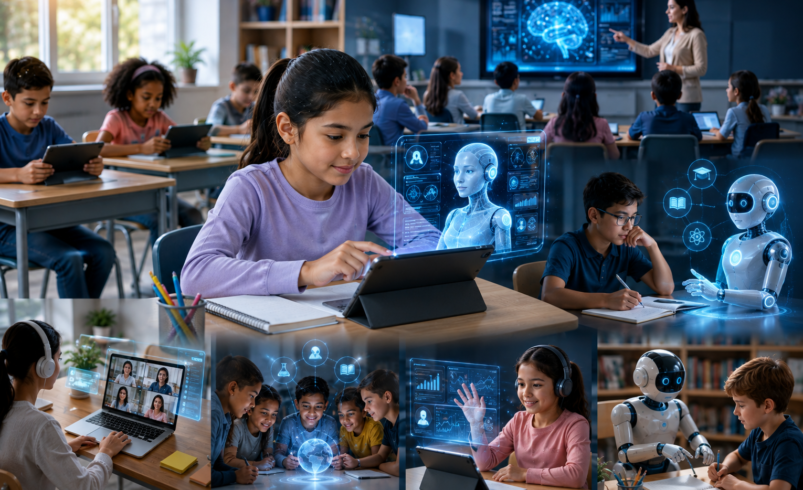
Artificial intelligence is changing how students learn, teachers work, and educational institutions operate. From intelligent tutoring systems to AI-powered learning platforms, technology is creating new opportunities to make education more personalized, accessible, and engaging.
Personalized Learning Experiences
One of the biggest advantages of AI in education is its ability to support personalized learning. AI systems can analyze a student’s progress and help provide learning materials, practice activities, and explanations that match their individual needs and pace.
AI-Powered Tutoring
AI tutors can provide students with instant assistance when they are struggling with a topic. They can explain concepts in different ways, answer questions, provide examples, and offer practice exercises, giving learners additional support outside the traditional classroom.
Supporting Teachers
AI can also help teachers manage routine responsibilities. Tasks such as creating lesson materials, organizing information, preparing quizzes, and summarizing student performance can be assisted by AI, allowing educators to spend more time interacting with students.
Making Learning More Interactive
AI can make lessons more engaging through simulations, virtual experiences, intelligent educational games, and interactive learning environments. These tools can help students explore complex concepts through practical and visual experiences.
Breaking Language Barriers
AI-powered translation and language-learning tools can make educational resources available to students who speak different languages. Real-time translation, speech recognition, and personalized language assistance could help create more inclusive learning environments.
Improving Accessibility
AI has the potential to make education more accessible to students with different learning needs. Voice-based tools, automated captions, text-to-speech systems, and adaptive interfaces can provide alternative ways for students to access educational content.
Smarter Assessment and Feedback
AI can assist with evaluating assignments and identifying areas where students may need additional support. Fast feedback can help learners understand their mistakes and improve their skills without always having to wait for manual evaluation.
Preparing Students for the Future
As AI becomes increasingly important across industries, students will need to understand how to use technology responsibly. Education can help learners develop digital skills, critical thinking, creativity, communication, and the ability to evaluate information.
Challenges and Responsible AI Use
AI in education also brings challenges involving privacy, academic integrity, inaccurate information, bias, and overdependence on technology. Schools and educators will need clear guidelines to ensure that AI supports learning rather than replacing meaningful human interaction.
The Changing Role of Teachers
AI is unlikely to replace the importance of teachers. Instead, educators can use AI as a supporting tool while continuing to provide mentorship, emotional support, creativity, guidance, and human connection that technology cannot fully replicate.
“The future of education is not about replacing teachers with AI, but empowering teachers and students with smarter tools for learning.”
A New Era of Learning
AI could transform education by making learning more personalized, accessible, interactive, and efficient. When combined with skilled educators and responsible technology practices, artificial intelligence has the potential to create learning experiences that better prepare students for an increasingly digital world.