Ways to Reduce Stress: Amazing Tips for a Calmer Lifestyle Modern life can feel like a constant race against the clock. Work responsibilities, family commitments, social activities, financial
Ways to Reduce Stress: Amazing Tips for a Calmer Lifestyle
Modern life can feel like a constant race against the clock. Work responsibilities, family commitments, social activities, financial concerns, and everyday tasks can make it difficult to find time to relax. While some stress is a normal part of life, ongoing stress can affect your mood, sleep, concentration, and overall well-being.
The good news is that managing stress does not always require major lifestyle changes. Small, consistent habits can create more calm and help you handle busy days more effectively.
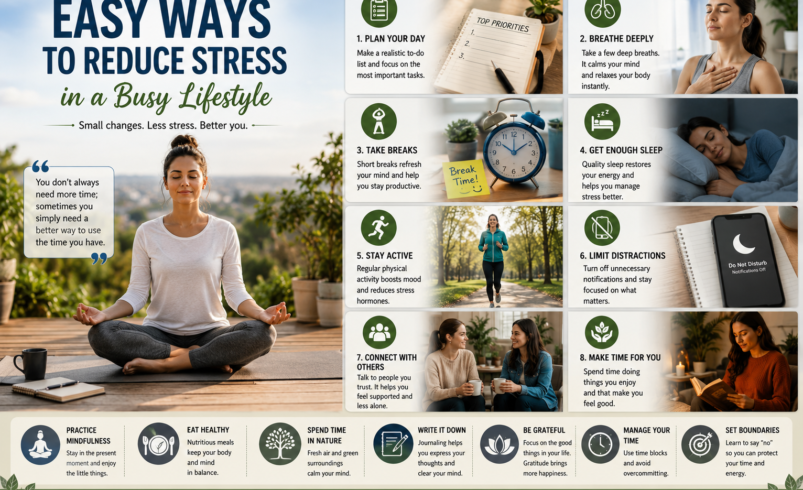
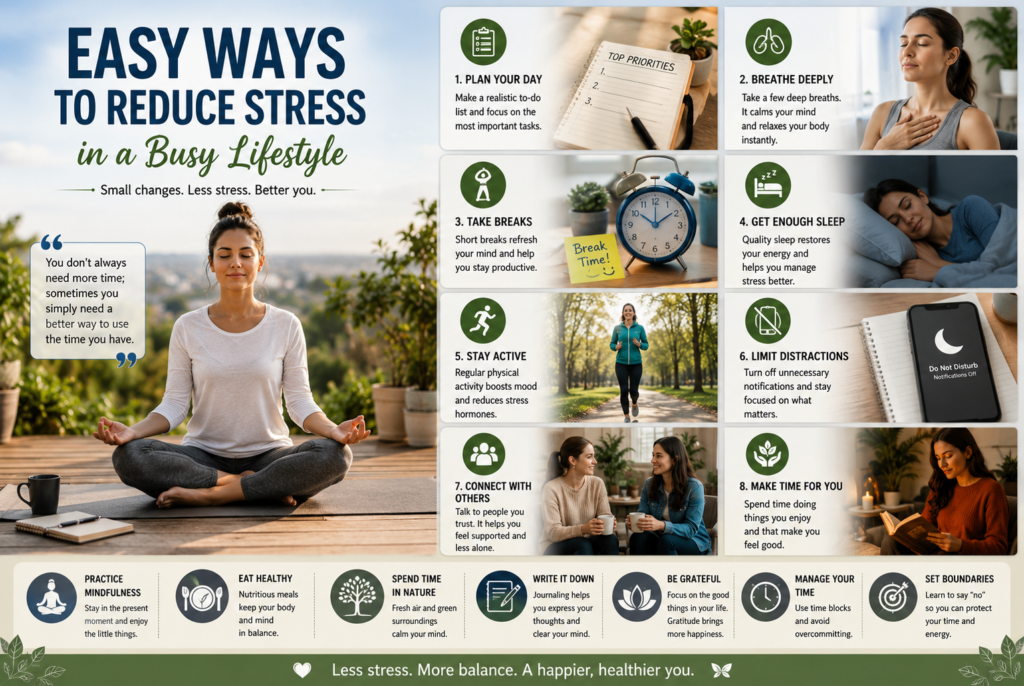
“You do not always need more time; sometimes you simply need a better way to use the time you have.”
Understanding Everyday Stress
Stress is the body’s natural response to challenging or demanding situations. A certain amount of stress can motivate you to complete tasks and respond to problems. However, constantly feeling overwhelmed can make everyday life more difficult.
Learning to recognize your personal stress triggers is an important first step toward managing them.
1. Start Your Day Without Rushing
The way you begin your morning can influence how the rest of the day feels.
Instead of immediately checking emails or social media, give yourself a few quiet minutes to prepare mentally for the day.
Try a Simple Morning Routine
Drink a glass of water.
Stretch for a few minutes.
Eat a balanced breakfast.
Review your priorities.
Take a few slow breaths.
Avoid unnecessary phone notifications.
A predictable morning routine can make busy days feel more manageable.
2. Create a Realistic To-Do List
Long to-do lists can sometimes increase feelings of pressure. Instead of trying to complete everything at once, identify the most important tasks.
Use the Three-Priority Method
At the beginning of the day, choose three important tasks that you would like to complete.
Once those priorities are handled, move on to less urgent tasks.
This approach can help prevent you from feeling overwhelmed by an endless list of responsibilities.
3. Take Short Breaks During the Day
Working continuously for hours without a break can leave you mentally exhausted.
Short breaks can give your mind an opportunity to reset.
Simple Break Ideas
Walk around your workspace.
Stretch your shoulders and neck.
Look away from your screen.
Drink water.
Step outside for fresh air.
Take several slow breaths.
Even a few minutes away from a demanding task can make it easier to return with a clearer mind.
4. Practice Deep Breathing
Slow, controlled breathing is a simple relaxation technique that can be practiced almost anywhere.
Try This Simple Exercise
Sit comfortably.
Relax your shoulders.
Breathe in slowly through your nose.
Pause briefly.
Exhale slowly.
Repeat several times.
The goal is not to eliminate every stressful thought but to create a brief moment of calm.
5. Get Enough Quality Sleep
Busy schedules can make sleep feel like something you can sacrifice. However, sleep is an important part of physical and mental well-being.
Build a Better Sleep Routine
Maintain a consistent bedtime when possible.
Keep your bedroom comfortable and quiet.
Reduce stimulating activities before bed.
Limit unnecessary screen use at night.
Avoid working right up until bedtime when possible.
If persistent sleep problems are affecting daily life, consider speaking with a healthcare professional.
Ways to Reduce Stress
6. Make Time for Physical Activity
Exercise can be an effective way to support mood and overall well-being.
You do not necessarily need a long workout. Walking, cycling, stretching, dancing, swimming, or short home workouts can all help you stay active.
Start Small
Try taking a 10-minute walk during a break or after work. Small amounts of movement can be easier to maintain than an unrealistic exercise routine.
7. Limit Unnecessary Notifications
Constant alerts from phones, email, and social media can make it difficult to focus and relax.
Consider turning off notifications that are not important.
Create Digital Boundaries
Set specific times to check emails and messages instead of responding to every notification immediately.
You can also create periods during the day when your phone is kept away from your workspace.
8. Learn to Say “No”
Trying to please everyone can create unnecessary pressure.
You do not have to accept every invitation, request, or responsibility. Learning to say no politely can help protect your time and energy.
A Simple Response
“I appreciate you asking, but I don’t have the time to take this on right now.”
Setting boundaries is not selfish. It can help you manage existing responsibilities more effectively.
9. Avoid Multitasking Too Much
Multitasking may seem productive, but constantly switching between tasks can make it harder to concentrate.
Instead, try focusing on one important task at a time.
Try Time Blocking
Set aside specific periods for:
Focused work
Emails
Meetings
Exercise
Meals
Personal activities
Relaxation
Having dedicated time for different activities can create more structure in your day.
10. Eat Regular, Balanced Meals
Busy schedules can lead to skipped meals or frequent reliance on convenience foods.
Eating regular, balanced meals can help support energy levels throughout the day.
Include foods such as:
Vegetables and fruits
Whole grains
Protein-rich foods
Nuts and seeds
Healthy fats
Adequate fluids
Planning simple meals ahead of time can make healthy eating easier during particularly busy weeks.
11. Spend Time in Nature
Spending time outdoors can provide a break from screens, work, and daily responsibilities.
A walk in a park, sitting in a garden, or simply spending a few minutes outside can create an opportunity to slow down.
You do not need a long outdoor trip. Even short periods can become a useful part of your daily routine.
12. Make Time for Hobbies
Hobbies are not wasted time. Activities you genuinely enjoy can provide a mental break from responsibilities.
Consider activities such as:
Reading
Gardening
Cooking
Painting
Photography
Music
Crafting
Walking
Playing a sport
Choose something that feels enjoyable rather than something that creates another obligation.
13. Connect With People You Trust
Talking with supportive friends, family members, or colleagues can help you feel less isolated when life becomes overwhelming.
You do not always need someone to solve your problems. Sometimes simply sharing your thoughts with someone you trust can provide emotional support.
14. Organize Your Environment
A cluttered workspace or home can sometimes make it harder to feel organized.
Spend a few minutes each day putting things back where they belong.
Try the Five-Minute Reset
Set a timer for five minutes and focus on one small area. Put away items, clear your desk, or organize your essentials.
Small improvements can make your surroundings feel more comfortable without requiring hours of cleaning.
15. Practice Mindfulness
Mindfulness means paying attention to the present moment rather than constantly worrying about the past or future.
You can practice mindfulness while:
Drinking tea or coffee
Walking
Eating
Showering
Sitting quietly
Breathing
Focus on what you can see, hear, feel, smell, and taste.
16. Avoid Excessive Caffeine
Caffeine affects people differently. For some individuals, consuming too much—especially later in the day—may contribute to restlessness or interfere with sleep.
If you notice that caffeine makes you feel more tense or affects your sleep, consider reducing your intake or avoiding it later in the day.
17. Plan Tomorrow Before Going to Bed
Unfinished tasks can keep your mind active at night.
Spend a few minutes writing down what needs to be done the next day.
Prepare the Night Before
You can:
Choose your clothes.
Prepare breakfast ingredients.
Pack your bag.
Review your schedule.
Write down your top priorities.
This can reduce morning decisions and make the next day feel more organized.
18. Stop Trying to Make Everything Perfect
Perfectionism can create unnecessary pressure.
Instead of asking whether something is perfect, ask whether it is good enough for the situation.
Accepting that mistakes and imperfect days are normal can make it easier to move forward.
19. Make Time for Yourself
Personal time does not have to mean an entire day off.
Even 15–20 minutes spent doing something you enjoy can provide a valuable mental break.
Create small pockets of personal time throughout your week and treat them as important appointments.
20. Focus on What You Can Control
Some stressful situations cannot be changed immediately.
When you encounter something difficult, separate the situation into two categories:
What can I control?
What cannot I control?
Then focus your energy on actions that are within your control.
A Simple Daily Stress-Management Routine
You can combine several of these habits into a simple daily routine:
Morning
Wake up at a consistent time.
Drink water.
Take a few slow breaths.
Review your top priorities.
Eat a balanced breakfast.
During the Day
Take short breaks.
Move your body.
Stay hydrated.
Limit unnecessary notifications.
Focus on one task at a time.
Evening
Reduce work-related activities.
Spend time with people you enjoy.
Do something relaxing.
Prepare for tomorrow.
Follow a consistent bedtime routine.
Common Stress-Management Mistakes
Trying to Change Everything at Once
Starting too many habits simultaneously can become another source of pressure. Choose one or two changes and build gradually.
Ignoring Rest
Rest is not a sign of laziness. Your body and mind need recovery time.
Using Unhealthy Coping Habits
Excessive alcohol, smoking, overeating, or other harmful behaviors may provide temporary relief but can create additional problems over time.
Comparing Your Life With Others
Social media often shows carefully selected moments rather than someone’s complete reality. Constant comparison can increase unnecessary pressure.
When Should You Seek Professional Support?
Everyone experiences stress, but persistent or overwhelming stress deserves attention.
If stress is significantly affecting your sleep, work, relationships, daily functioning, or ability to cope, consider talking with a qualified mental-health or healthcare professional.
Seeking support is a practical step toward taking care of yourself.
Frequently Asked Questions
What is the easiest way to reduce stress?
Start with a small habit such as slow breathing, a short walk, taking regular breaks, or creating a realistic daily priority list.
How can I reduce stress when I have very little time?
Use short techniques that fit into your schedule. A few minutes of breathing, stretching, walking, or quiet time can be easier to maintain than lengthy relaxation sessions.
Can exercise help with stress?
Regular physical activity can support mood and overall well-being. Choose an activity you enjoy and can realistically maintain.
Does sleep affect stress?
Yes. Poor or insufficient sleep can make it harder to cope with everyday challenges. Maintaining healthy sleep habits is an important part of overall well-being.
How can I stop feeling overwhelmed by my workload?
Break large tasks into smaller steps, identify your most important priorities, take regular breaks, and communicate when your workload becomes unrealistic.
Conclusion
A busy lifestyle does not mean you have to live in a constant state of stress. Simple habits such as taking short breaks, getting enough sleep, exercising regularly, organizing your day, setting boundaries, limiting unnecessary notifications, and making time for enjoyable activities can help create a healthier balance.
You do not need to make dramatic changes overnight. Start with one small habit, practice it consistently, and gradually build a routine that gives you more time for both responsibilities and recovery.
Managing stress is not about creating a completely stress-free life. It is about developing healthier ways to respond to the challenges that life brings.