
Superfoods You Should Include in Your Diet
- August 20, 2026
- 0
Superfoods for a Healthy Diet: Amazing Foods to Try Eating a balanced diet is one of the most important ways to support overall health and well-being. While no


Superfoods for a Healthy Diet: Amazing Foods to Try Eating a balanced diet is one of the most important ways to support overall health and well-being. While no
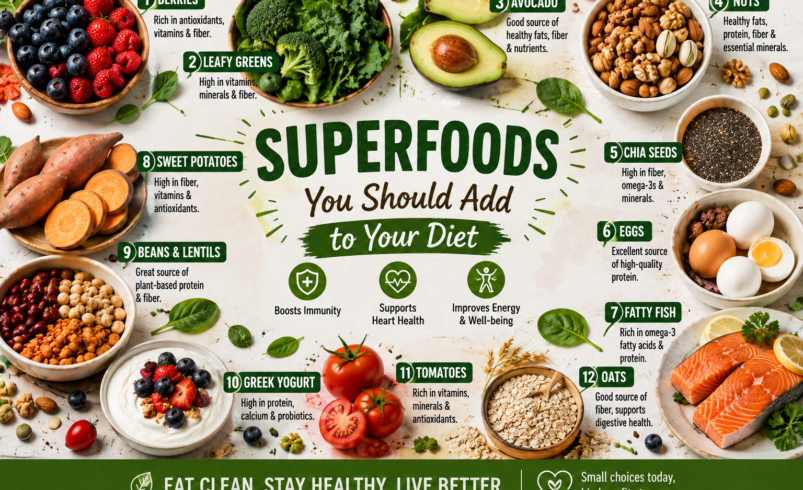
Eating a balanced diet is one of the most important ways to support overall health and well-being. While no single food can provide every nutrient your body needs, some foods are particularly rich in vitamins, minerals, fiber, healthy fats, antioxidants, and other beneficial nutrients. These foods are often popularly called superfoods.
From berries and leafy greens to nuts, seeds, legumes, and fatty fish, many nutrient-dense foods can easily become part of everyday meals. The key is not to focus on one “miracle” ingredient but to include a wide variety of nutritious foods in a balanced eating pattern.
“There is no single magic food for good health; the real power comes from variety, balance, and consistency.”
“Superfood” is a popular term rather than a formal scientific category. It generally describes foods that provide a high concentration of beneficial nutrients relative to their calories or serving size.
Many everyday foods can fit this description, including fruits, vegetables, whole grains, legumes, nuts, seeds, and certain seafood.
Our bodies require many different nutrients to function properly. Vitamins and minerals support numerous body processes, while protein helps maintain and repair tissues. Fiber supports digestive health, and healthy fats play important roles in normal body functions.
Including a variety of nutrient-rich foods can help make your overall diet more balanced.
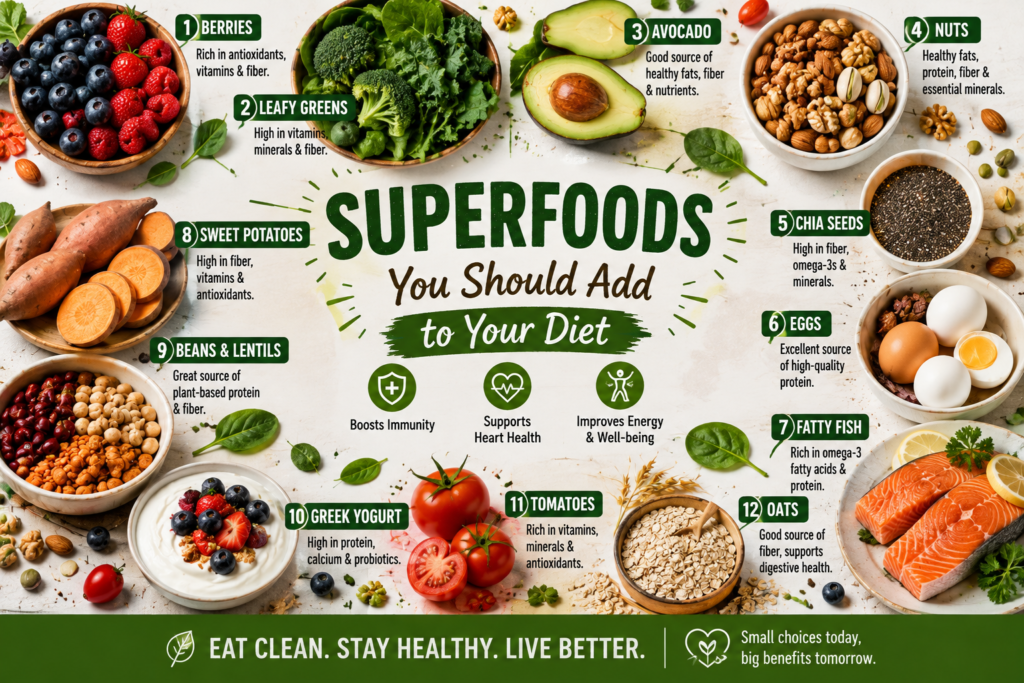
Berries such as blueberries, strawberries, raspberries, and blackberries are flavorful and versatile.
They provide fiber and various vitamins, minerals, and plant compounds.
Spinach, kale, collard greens, and other leafy vegetables can be excellent additions to a healthy diet.
They provide nutrients such as folate, vitamin K, vitamin C, and carotenoids, depending on the vegetable.
Try adding leafy greens to:
Avocados are known for their creamy texture and contain fiber and predominantly unsaturated fats.
They can be used in many meals, making them a convenient ingredient for people looking to add more plant-based foods to their diet.
Spread avocado on whole-grain toast, add it to salads, or use it as a topping for grain bowls.
Almonds, walnuts, pistachios, and other nuts provide healthy fats, protein, fiber, vitamins, and minerals.
Because nuts are energy-dense, portion size is worth considering.
Keep a small portion available as a snack or sprinkle chopped nuts over oatmeal, yogurt, salads, or cooked vegetables.
Chia seeds, flaxseeds, pumpkin seeds, and sunflower seeds are small but nutrient-rich additions to meals.
They can provide fiber, healthy fats, protein, and various minerals.
Add them to:
Fatty fish such as salmon, sardines, mackerel, and trout are well known for providing omega-3 fatty acids.
They can also provide high-quality protein and important nutrients such as vitamin B12.
Pair grilled or baked fish with vegetables and a whole grain such as brown rice or quinoa for a balanced meal.
Eggs are a convenient source of protein and contain several vitamins and minerals.
They can be prepared in numerous ways, making them an easy choice for breakfast, lunch, or dinner.
Try boiled eggs with a salad, scrambled eggs with vegetables, or an omelet with leafy greens.
Greek yogurt can provide protein and calcium and can be paired with many other nutritious foods.
Choose an option that fits your dietary needs and consider unsweetened varieties if you want to reduce added sugar.
Combine Greek yogurt with berries, nuts, seeds, and a small amount of oats for a quick and satisfying meal.
Beans, lentils, and chickpeas are affordable and versatile sources of plant-based protein and fiber.
They can be particularly useful for people who want to include more plant-based foods in their diet.
Oats are a nutritious whole grain that provides carbohydrates and fiber.
They are especially convenient for breakfast and can be customized with different toppings.
Try adding:
Sweet potatoes provide carbohydrates, fiber, and several vitamins and minerals. Their naturally sweet flavor makes them useful in both savory and sweet dishes.
They can be baked, roasted, steamed, or incorporated into soups and grain bowls.
Broccoli, cauliflower, cabbage, Brussels sprouts, and similar vegetables belong to the cruciferous vegetable family.
They provide fiber, vitamins, minerals, and various plant compounds.
Roast them with herbs and spices, add them to stir-fries, or include them in soups.
Tomatoes provide vitamin C, potassium, and carotenoids such as lycopene.
Fresh tomatoes can be added to salads and sandwiches, while cooked tomatoes can be used in soups, sauces, and vegetable dishes.
Green tea contains naturally occurring compounds called polyphenols.
Enjoying unsweetened green tea can be a simple alternative to sugary beverages.
However, it should complement—not replace—a varied and nutritious diet.
Dark chocolate with a higher cocoa content can provide cocoa flavanols and other plant compounds.
Because chocolate can also contain considerable amounts of sugar and calories, moderation is important.
A small portion can be enjoyed as part of an overall balanced diet.
You do not need to completely change your meals. Instead, make small additions to foods you already enjoy.
Add berries and seeds to oatmeal or yogurt.
Add leafy greens, beans, avocado, or tomatoes to salads and sandwiches.
Include vegetables, legumes, whole grains, or fatty fish in your main meal.
Try fruit, nuts, yogurt, or a small portion of seeds instead of highly processed snack foods.
One simple strategy is to include a variety of naturally colorful foods.
For example:
Different plant foods contain different nutrients and beneficial compounds, so variety matters.
Adding nutrient-dense foods does not mean you need to eliminate every other food from your diet.
A healthy eating pattern can include:
The overall quality and variety of your diet are more important than focusing heavily on a handful of foods.
No individual food can compensate for an overall poor diet or unhealthy lifestyle.
Even nutritious foods can contribute significant calories when consumed in very large portions.
You do not need expensive powders or specialty products to eat nutritiously. Common foods such as beans, oats, eggs, vegetables, fruits, and nuts can provide plenty of nutritional value.
People have different nutritional requirements, allergies, intolerances, and medical considerations. If you have a specific dietary concern, consult a qualified healthcare professional or registered dietitian.
A simple formula is:
Vegetables + Protein + Whole Grain + Healthy Fat + Fruit
For example, you could prepare a bowl containing spinach, salmon, quinoa, avocado, and berries.
This approach focuses on overall balance rather than relying on one particular ingredient.
There is no single best superfood. A wide variety of nutrient-rich foods can contribute to a healthy diet.
There is no specific number you need to eat. Focus instead on including a variety of fruits, vegetables, whole grains, protein sources, and healthy fats throughout your meals.
Not necessarily. Affordable foods such as oats, beans, lentils, eggs, seasonal vegetables, and certain fruits can be highly nutritious.
Yes. Many nutrient-rich foods can be eaten regularly as part of a varied diet. Variety remains important.
Supplements can be useful in certain circumstances, but they should not generally be viewed as a replacement for a balanced diet. Specific supplement needs should be discussed with a qualified healthcare professional.
Superfoods are not magical ingredients, but many nutrient-dense foods can make valuable additions to a balanced diet. Berries, leafy greens, nuts, seeds, beans, oats, eggs, fatty fish, avocados, and colorful vegetables all offer different nutritional benefits.
Rather than searching for one perfect food, focus on variety, balance, portion awareness, and consistent healthy choices. By gradually adding more whole and nutrient-rich foods to your meals, you can create an eating pattern that is both nutritious and enjoyable.