How Businesses Are Adapting to Changing Consumer Trends
August 21, 2026
0
Smart Businesses Are Adapting to Changing Consumer Trends Consumer behavior is constantly evolving. Changes in technology, social media, economic conditions, lifestyles, and customer expectations are influencing how people
Smart Businesses Are Adapting to Changing Consumer Trends
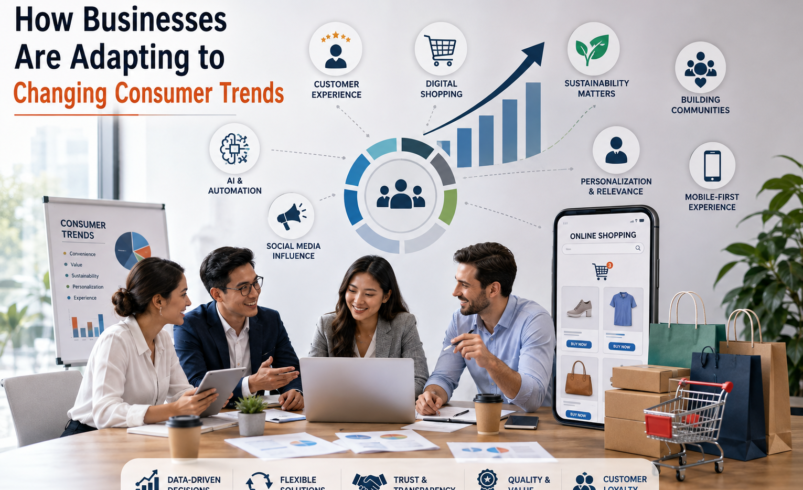
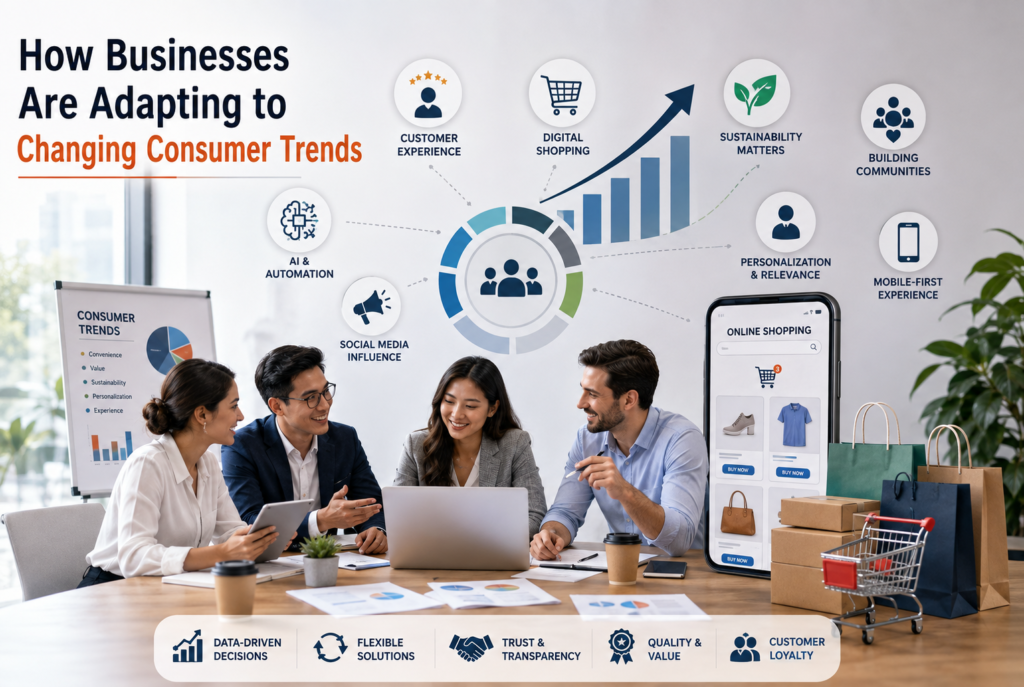
Consumer behavior is constantly evolving. Changes in technology, social media, economic conditions, lifestyles, and customer expectations are influencing how people discover, evaluate, and purchase products and services. As a result, businesses can no longer rely on traditional strategies alone. They must understand what customers want and adapt quickly to remain competitive.
From personalized shopping experiences to sustainable products and digital-first services, modern businesses are finding new ways to connect with consumers. Understanding these changes can help companies build stronger relationships, improve customer satisfaction, and create long-term growth.
“The businesses that understand changing customer expectations are the ones best positioned to shape the future.”
1. Understanding the Modern Consumer
Today’s consumers have access to more information and choices than ever before. Before making a purchase, they may compare prices, read reviews, watch videos, check social media, and research competing brands.
This has made consumers more informed and selective. Businesses are responding by focusing on transparency, quality, convenience, and customer experience.
2. The Rise of Digital Shopping
Online shopping has become an important part of everyday consumer behavior. Customers expect businesses to provide convenient digital experiences, whether they are purchasing products, booking services, or communicating with a company.
Businesses are adapting by:
Improving their websites and online stores
Offering mobile-friendly shopping experiences
Providing multiple digital payment options
Simplifying checkout processes
Using online customer support
Offering convenient delivery and pickup options
A smooth digital experience can make a significant difference in whether a customer completes a purchase.
3. Personalization Is Becoming More Important
Consumers increasingly expect brands to understand their individual needs. Generic advertising is often less effective than personalized recommendations and relevant content.
Businesses are using customer data and digital tools to provide:
Personalized product recommendations
Customized email campaigns
Relevant advertisements
Personalized offers and discounts
Content based on customer interests
Loyalty rewards tailored to purchasing habits
When used responsibly, personalization can make customers feel understood and valued.
4. Social Media Is Influencing Buying Decisions
Social media has become more than an entertainment platform. It is now an important source of product discovery, reviews, recommendations, and brand interaction.
Businesses are adapting by creating engaging social media content such as:
Short-form videos
Product demonstrations
Customer testimonials
Behind-the-scenes content
Educational posts
Influencer collaborations
Interactive polls and stories
Social media also allows companies to communicate directly with customers and respond to their questions and feedback.
5. Consumers Want Authentic Brands
Modern consumers often look beyond products and prices. They want to know what a business represents and whether its values align with their own expectations.
Businesses are therefore focusing more on authenticity by communicating their:
Brand story
Mission and values
Product sourcing
Company culture
Community involvement
Social and environmental initiatives
Authentic communication can help businesses build credibility and stronger customer relationships.
Businesses Are Adapting
6. Growing Demand for Sustainable Products
Environmental awareness is influencing purchasing decisions in many markets. Consumers are becoming increasingly interested in products that are responsibly produced, reusable, recyclable, or made with sustainable materials.
Businesses are responding by:
Reducing unnecessary packaging
Using environmentally friendly materials
Improving manufacturing processes
Reducing waste
Offering reusable products
Communicating sustainability efforts
Sustainability is becoming an important consideration for businesses looking to appeal to environmentally conscious customers.
7. Convenience Is a Major Consumer Priority
People are increasingly looking for products and services that save time and reduce effort. Convenience can influence everything from product selection to delivery and customer service.
Companies are responding with:
Faster delivery
Easy returns
Online booking
Subscription services
One-click purchasing
Contactless payment
Self-service options
Businesses that remove unnecessary friction from the customer journey can create a more positive experience.
8. Mobile-First Customer Experiences
Smartphones have become a major part of the consumer journey. Customers use mobile devices to search for products, compare prices, read reviews, communicate with brands, and make purchases.
Businesses are adapting by making sure their websites, applications, advertisements, and communication channels work effectively on mobile devices.
A mobile-friendly experience is no longer simply an advantage—it is an important part of modern customer service.
9. Businesses Are Using Customer Feedback More Effectively
Customer feedback provides valuable information about what people like, dislike, and expect from a brand.
Companies are increasingly monitoring:
Online reviews
Customer surveys
Social media comments
Support requests
Product ratings
Website behavior
Customer conversations
This information can help businesses identify problems and improve products and services.
10. Flexible Products and Services
Changing lifestyles are creating demand for greater flexibility. Consumers may want products, pricing plans, subscriptions, and services that can adapt to their individual circumstances.
Businesses are responding with flexible options such as:
Customizable products
Multiple subscription plans
Flexible payment options
Personalized services
Online and offline purchasing choices
Easy upgrades and cancellations
Flexibility can make a business more appealing to customers with different needs.
11. The Growing Importance of Customer Experience
Price and product quality remain important, but customer experience has become a major differentiator.
Businesses are examining the entire customer journey—from the first interaction with a brand to post-purchase support.
A positive customer experience can include:
Friendly communication
Fast responses
Simple purchasing processes
Clear product information
Reliable delivery
Easy returns
Effective after-sales support
Companies that consistently provide positive experiences have more opportunities to build customer loyalty.
12. Artificial Intelligence Is Changing Business Strategies
Artificial intelligence is helping businesses understand customers and respond to their needs more efficiently.
Companies are using AI for:
Customer service chatbots
Personalized recommendations
Market research
Content creation
Demand forecasting
Customer behavior analysis
Marketing automation
However, businesses need to balance automation with human interaction. Customers still value genuine communication, empathy, and personal attention.
13. Omnichannel Shopping Is Becoming the New Normal
Consumers often move between different channels before completing a purchase. Someone may discover a product on social media, research it on a website, visit a physical store, and finally purchase it through a mobile device.
Businesses are therefore creating connected experiences across:
Websites
Mobile apps
Social media
Physical stores
Marketplaces
Email
Messaging platforms
Providing consistent information across these channels can make the customer journey smoother.
14. Businesses Are Focusing on Community Building
Instead of simply selling products, some brands are creating communities around their businesses.
They may use social media groups, events, newsletters, online communities, and interactive content to encourage customers to connect with the brand and each other.
A strong community can increase engagement and encourage customers to become long-term supporters of a business.
15. Data-Driven Decision Making
Businesses are increasingly using data to understand changing consumer behavior rather than relying only on assumptions.
They can analyze information such as:
Purchasing patterns
Website traffic
Search behavior
Customer demographics
Product performance
Engagement rates
Repeat purchases
These insights can help businesses identify trends and make better decisions about products, marketing, pricing, and customer service.
16. Businesses Are Becoming More Agile
Consumer trends can change quickly. A product that is popular today may lose attention tomorrow. Businesses therefore need to respond quickly to new opportunities and challenges.
Agile businesses are more willing to:
Test new products
Experiment with marketing strategies
Respond to customer feedback
Update their services
Explore new technologies
Adapt their communication
Being flexible allows businesses to respond to changing markets without losing sight of their long-term goals.
17. The Future of Consumer Trends
Consumer expectations will continue to evolve as technology and lifestyles change. Businesses that continuously monitor customer behavior and remain open to innovation will be better prepared for the future.
Emerging trends may include greater use of artificial intelligence, more personalized experiences, smarter shopping technologies, sustainable business practices, and increasingly connected digital experiences.
Conclusion
Changing consumer trends are creating both challenges and opportunities for businesses. Companies that understand their customers, embrace technology, provide convenience, prioritize authenticity, and respond to feedback can remain relevant in a competitive marketplace.
Adaptation is not simply about following every new trend. It is about understanding why consumer expectations are changing and finding meaningful ways to meet those expectations. Businesses that remain flexible, customer-focused, and willing to innovate can build stronger relationships and achieve sustainable growth in the long term.