The Evolution of Smartphones: From Basic Phones to AI Devices
August 21, 2026
0
Evolution of Smartphones Smartphones have become an essential part of modern life. Today, a single device can be used for communication, photography, entertainment, online shopping, banking, navigation, work,
Evolution of Smartphones
Smartphones have become an essential part of modern life. Today, a single device can be used for communication, photography, entertainment, online shopping, banking, navigation, work, education, and much more.
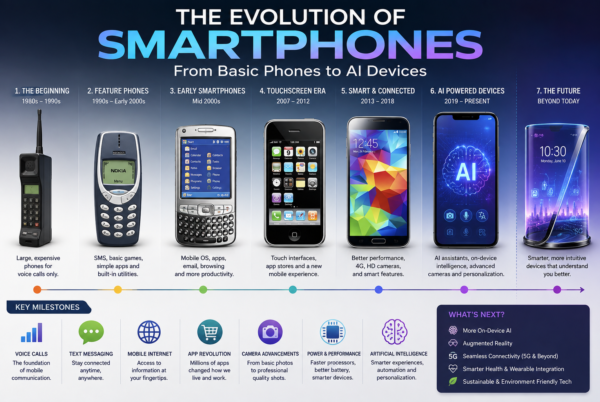
However, smartphones were not always this advanced. Their journey began with simple mobile phones designed mainly for calls and messages and gradually evolved into powerful computers equipped with high-resolution cameras, advanced processors, internet connectivity, and artificial intelligence.
“The smartphone has evolved from a communication device into a pocket-sized gateway to the digital world.”
The Early Days of Mobile Phones
The earliest mobile phones were designed primarily for voice communication. They were often large, expensive, and had limited battery life.
Their main purpose was simple: allowing people to make and receive calls without being connected to a landline.
Basic Features
Early mobile phones generally offered:
Voice calling
Physical buttons
Small displays
Basic contact storage
Limited battery capacity
Although these devices had few features compared with modern smartphones, they represented a major change in communication.
The Rise of Feature Phones
As mobile technology developed, phones became smaller, more affordable, and more practical.
These devices became popular because they offered useful digital features while remaining relatively simple to operate.
The Beginning of the Smartphone Era
The transition from feature phones to smartphones marked a major turning point.
Smartphones combined communication features with computing capabilities, allowing users to perform tasks that previously required separate devices.
Mobile Operating Systems
Smartphone operating systems made it possible to install applications and customize devices according to individual needs.
Instead of using a phone only for built-in functions, users could choose applications for:
Email
Navigation
Social media
Photography
Productivity
Entertainment
Shopping
The Touchscreen Revolution
Touchscreens dramatically changed the way people interacted with mobile devices.
Physical keyboards and buttons gradually gave way to large touch displays that could support gestures such as tapping, swiping, and pinching.
Evolution of Smartphones
Why Touchscreens Changed Smartphones
Touch interfaces made it easier to:
Browse websites
Watch videos
View photos
Play games
Use applications
Type messages
Navigate maps
Larger displays also made smartphones more useful for activities that previously required computers.
The Growth of Mobile Internet
Faster mobile networks played a major role in smartphone development.
As mobile internet speeds improved, smartphones became increasingly capable of accessing online services.
From Calls to Connected Experiences
People could now use their phones to:
Browse the web
Send emails
Stream videos
Use social media
Make online purchases
Access cloud services
Use navigation apps
The smartphone gradually became a primary internet-connected device for many people.
Smartphones Become Powerful Cameras
Mobile photography has undergone enormous changes.
Early phone cameras were basic and produced low-resolution images. Modern smartphones can capture detailed photos and videos using multiple cameras and advanced image processing.
Computational Photography
Today’s smartphones use software and AI-powered processing to improve images.
Features can include:
Night photography
Portrait effects
Image stabilization
HDR processing
Scene recognition
Automatic exposure adjustments
Advanced video recording
The combination of powerful camera hardware and intelligent software has made smartphones useful tools for both casual users and professional creators.
The App Economy
Applications transformed smartphones into highly customizable digital platforms.
Instead of buying a device with a fixed set of functions, users can download applications based on their needs.
Apps for Almost Everything
There are applications for:
Banking
Education
Fitness
Travel
Food delivery
Shopping
Work
Communication
Entertainment
Photography
This ecosystem has become one of the most important parts of modern smartphone technology.
Smartphones Become Productivity Tools
Smartphones are no longer limited to personal communication. They have become important tools for professional work.
Working From Anywhere
Users can now:
Join video meetings
Check work emails
Edit documents
Manage projects
Access cloud storage
Communicate with teams
Monitor business activities
This has contributed to the growth of flexible and remote working environments.
The Introduction of Biometric Security
As smartphones became responsible for storing more personal information, security became increasingly important.
Manufacturers introduced technologies such as fingerprint scanners and facial recognition.
Faster and More Secure Access
Biometric systems allow users to unlock devices and authenticate certain activities without relying entirely on traditional passwords.
Modern smartphones can combine biometric authentication with encryption and other security features to protect personal information.
The Era of 5G Smartphones
The introduction of 5G brought faster mobile connectivity and lower latency to compatible devices and networks.
What 5G Enables
Faster connectivity can support experiences such as:
High-quality video streaming
Faster downloads
Cloud-based applications
Connected devices
Online gaming
Real-time communication
The impact of 5G depends on network availability, device compatibility, and local infrastructure.
Smartphones and Artificial Intelligence
AI is becoming one of the most important developments in smartphone technology.
Modern smartphones increasingly use AI for photography, voice recognition, personalization, translation, security, and other features.
AI-Powered Photography
AI can recognize scenes, improve image quality, remove unwanted elements in some applications, and optimize camera settings.
Intelligent Assistants
Voice assistants can help users perform tasks through natural-language commands.
On-Device AI
Some newer smartphones can process certain AI tasks directly on the device instead of sending all information to remote servers.
This can improve responsiveness and may offer privacy and connectivity advantages for supported features.
What Are AI Smartphones?
AI smartphones are devices designed with hardware and software specifically optimized to support advanced artificial intelligence features.
They may include specialized processors or neural processing capabilities that can handle certain AI workloads more efficiently.
AI Features in Modern Smartphones
Depending on the device, AI capabilities may include:
Smart photo editing
Real-time translation
Voice transcription
Personalized recommendations
Intelligent search
Writing assistance
Image generation
Call-related assistance
On-device content processing
How Smartphones Are Becoming More Personalized
AI can help smartphones understand patterns in how users interact with their devices.
For example, a phone may learn preferred settings, frequently used applications, or common routines and use this information to provide more relevant suggestions.
The goal is to make the device feel more responsive to individual needs.
The Role of Cloud Computing
Smartphone evolution has also been closely connected to cloud computing.
Cloud services allow users to store photos, documents, contacts, and other information online and access them from multiple devices.
Seamless Digital Experiences
Cloud connectivity makes it possible to:
Back up smartphone data
Synchronize information
Access files remotely
Continue activities across devices
Store large amounts of media
This has helped smartphones become part of broader digital ecosystems.
Challenges of Modern Smartphones
Despite their many advantages, smartphones also present challenges.
Privacy
Smartphones can contain large amounts of personal information. Users should understand application permissions and privacy settings.
Security
Keeping software updated and using strong authentication can help protect devices from security threats.
Digital Dependence
Because smartphones provide so many services, people can become heavily dependent on them. Maintaining healthy technology habits is important.
Electronic Waste
Frequent device upgrades can contribute to electronic waste. Recycling old devices and extending their useful life can help reduce environmental impact.
What Could Smartphones Look Like in the Future?
The future of smartphones may involve even deeper integration with AI and other emerging technologies.
Smarter Personal Assistants
AI assistants may become better at understanding context and helping users complete multi-step tasks.
More Advanced On-Device AI
As mobile processors become more powerful, smartphones may perform increasingly sophisticated AI tasks directly on the device.
Improved Cameras
Computational photography and AI could continue to improve image and video quality.
New Device Designs
Foldable and flexible displays may become more practical, while smartphones could increasingly work alongside smart glasses, wearables, and other connected devices.
From Phones to Personal Digital Assistants
The smartphone has evolved from a device primarily used for communication into a powerful personal computing platform.
Today’s smartphone can function as a:
Camera
Navigation system
Entertainment device
Payment tool
Productivity assistant
Communication platform
Learning device
Digital wallet
AI assistant
This evolution demonstrates how quickly mobile technology can change when hardware, software, connectivity, and artificial intelligence develop together.
Final Thoughts
The evolution of smartphones is a story of continuous technological innovation. From basic phones that could only make calls to modern AI-powered devices capable of processing complex tasks, smartphones have transformed the way people communicate, work, learn, and interact with technology.
The next stage of smartphone development is likely to focus heavily on artificial intelligence, personalization, connectivity, and smarter interactions.
As smartphones continue to evolve, the most exciting changes may not simply be about having more features—they may be about creating devices that can understand users better and assist them more naturally in everyday life.