What Is the Internet of Things (IoT) and How Does It Work?
August 21, 2026
0
The Internet of Things, commonly known as IoT, is changing the way people interact with technology. From smart home devices and wearable gadgets to connected cars, industrial machines,
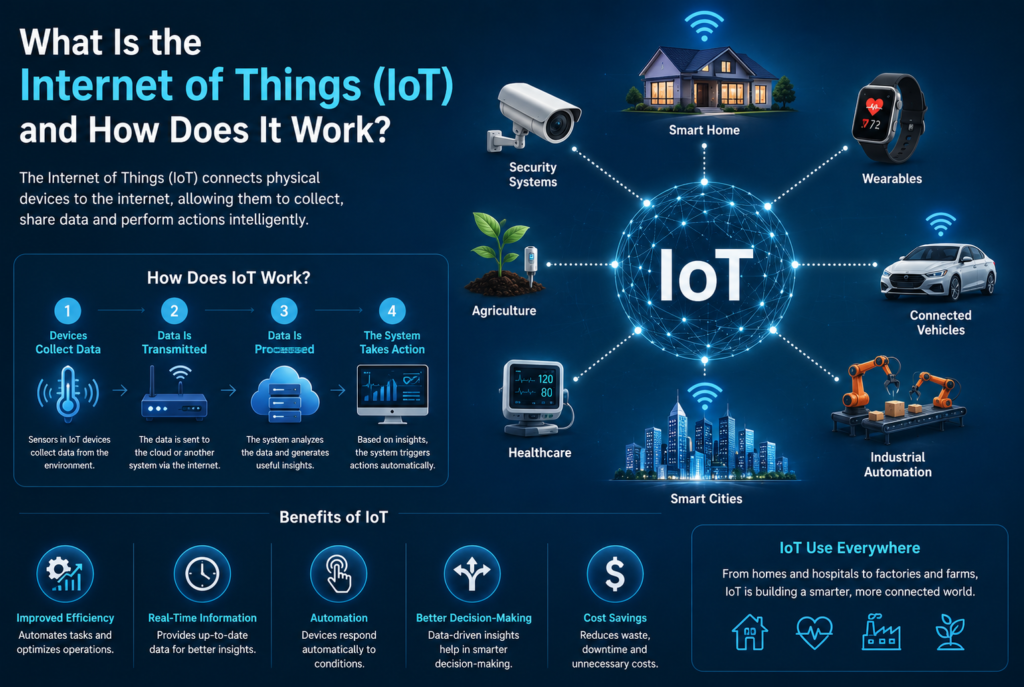
The Internet of Things, commonly known as IoT, is changing the way people interact with technology. From smart home devices and wearable gadgets to connected cars, industrial machines, and healthcare equipment, IoT allows physical devices to communicate, collect data, and perform tasks with limited human intervention.
As internet connectivity becomes increasingly integrated into everyday objects, IoT is creating smarter and more connected environments for homes, businesses, cities, and industries.
“The Internet of Things connects the physical world to the digital world, turning everyday objects into intelligent systems.”
What Is the Internet of Things?
The Internet of Things refers to a network of physical objects that are connected to the internet and can collect, exchange, and sometimes act on data.
These objects can include:
Smart home appliances
Fitness trackers
Security cameras
Smart watches
Connected vehicles
Industrial machines
Medical devices
Environmental sensors
Smart lighting systems
An IoT device generally uses sensors, connectivity, software, and data processing to perform its functions.
Internet of Things
How Does IoT Work?
IoT may appear complicated, but its basic process can be understood through a few key steps.
Step 1: Devices Collect Data
IoT devices often contain sensors that collect information from their surroundings.
For example, a smart thermostat can measure room temperature, while a fitness tracker can collect information about movement and activity.
Step 2: Data Is Transmitted
Once data is collected, the device sends it to another system through a communication network.
Depending on the device, this may happen through:
Wi-Fi
Bluetooth
Cellular networks
Ethernet
Zigbee
Other wireless technologies
Step 3: Data Is Processed
The collected information may be processed on the device itself, at an edge computing system, or through cloud-based platforms.
The system analyzes the data to determine what should happen next.
Step 4: The System Takes Action
Based on the processed information, the IoT system can trigger an action.
For example, a smart thermostat might detect that a room is too warm and automatically adjust the temperature.
Main Components of an IoT System
IoT systems generally consist of several connected components working together.
Sensors and Devices
Sensors collect information from the physical environment.
Examples include temperature sensors, motion sensors, cameras, pressure sensors, and location sensors.
Connectivity
Connectivity allows devices to communicate with other devices, networks, or cloud platforms.
Data Processing
Collected information needs to be analyzed to produce useful results. Processing can take place locally or on remote systems.
User Interface
Users need a way to interact with IoT systems. This could be a mobile application, website, dashboard, or voice assistant.
Examples of IoT in Everyday Life
Many people already use IoT technology without realizing it.
Smart Homes
Smart home devices are among the most familiar examples of IoT.
Connected devices can include:
Smart bulbs
Smart thermostats
Smart door locks
Security cameras
Smart speakers
Connected appliances
These devices can often be controlled remotely through smartphones or voice commands.
IoT in Healthcare
IoT is playing an important role in modern healthcare by connecting medical devices and collecting health-related information.
Remote Monitoring
Connected devices can help healthcare professionals monitor certain patient measurements remotely.
Wearable devices can also collect information such as activity levels and other measurements supported by the device.
This can support remote care and help professionals access information more efficiently.
IoT in Manufacturing
Manufacturing companies use IoT devices to monitor machines, production lines, and operating conditions.
Predictive Maintenance
Sensors can monitor equipment and identify unusual patterns.
This information can help companies plan maintenance before equipment failures cause significant interruptions.
Improving Production Efficiency
IoT systems can provide real-time information about production processes, helping businesses identify inefficiencies and improve operations.
IoT in Agriculture
Agriculture is another area where connected technology can make a difference.
Smart Farming
IoT sensors can monitor factors such as:
Soil moisture
Temperature
Humidity
Weather conditions
Crop environments
Farmers can use this information to make more informed decisions about irrigation, crop management, and resource usage.
IoT in Transportation
Connected vehicles and transportation systems are helping create smarter mobility solutions.
Connected Vehicles
Modern vehicles can use sensors and connectivity to collect information about vehicle performance, location, and surrounding conditions.
Smart Traffic Management
Cities can also use connected sensors to monitor traffic conditions and improve the management of roads, parking, and transportation infrastructure.
IoT in Smart Cities
IoT technology is helping cities become more connected and efficient.
Examples of Smart City IoT
Smart street lighting
Traffic monitoring
Parking systems
Waste management
Environmental monitoring
Public transportation tracking
By collecting real-time information, cities can better understand how public infrastructure is being used.
Benefits of IoT
The Internet of Things can provide several benefits to individuals and organizations.
Improved Efficiency
Connected systems can automate repetitive tasks and optimize processes.
Real-Time Information
IoT devices can provide up-to-date information about physical environments and equipment.
Automation
Devices can respond automatically to specific conditions without requiring constant human input.
Better Decision-Making
Data collected from connected devices can help organizations identify trends and make more informed decisions.
Cost Savings
Better monitoring and automation can potentially reduce waste, downtime, and unnecessary resource consumption.
Challenges of IoT
Despite its benefits, IoT also introduces several challenges.
Security Risks
Every connected device can potentially become a target for cyberattacks. Strong security practices are therefore essential.
Privacy Concerns
IoT devices may collect large amounts of information about people, homes, workplaces, or environments. Organizations need to handle this data responsibly.
Device Compatibility
Different manufacturers may use different technologies and communication standards, which can make integration more complicated.
Large Amounts of Data
IoT systems can generate enormous quantities of information. Organizations need appropriate systems to store, process, and analyze this data.
IoT and Artificial Intelligence
IoT and artificial intelligence can work together to create even smarter systems.
IoT devices collect information, while AI can analyze that information and identify patterns.
Smarter Automation
For example, connected sensors might collect information about equipment, while AI analyzes the data to predict when maintenance may be required.
This combination of connected devices and intelligent data analysis can create more responsive systems.
The Future of IoT
The number of connected devices is expected to continue growing as connectivity, sensors, cloud computing, edge computing, and AI technologies develop.
Future IoT systems may become more autonomous and capable of responding to changing conditions with less human intervention.
More Connected Environments
Homes, workplaces, vehicles, factories, farms, and cities may increasingly operate as interconnected digital ecosystems.
How Businesses Can Prepare for IoT
Businesses considering IoT adoption should focus on practical goals rather than connecting devices simply because the technology is available.
Identify a Real Business Problem
Start by identifying an area where monitoring, automation, or real-time information could provide measurable value.
Plan for Security
Security should be considered from the beginning, including device protection, network security, access controls, and software updates.
Manage Data Carefully
Organizations should establish clear processes for collecting, storing, analyzing, and protecting IoT-generated data.
Final Thoughts
The Internet of Things is creating a more connected world by allowing physical devices to communicate, collect information, and respond to changing conditions.
From smart homes and wearable technology to healthcare, manufacturing, agriculture, transportation, and smart cities, IoT is becoming an important part of modern technology.
As IoT continues to develop alongside artificial intelligence and advanced connectivity, connected devices are likely to become even more useful, intelligent, and integrated into everyday life.